Vulnerability & Defense

Photo by Miriam Miles on Unsplash

Photo by Miriam Miles on Unsplash

Let’s take a moment to thank our defenses.

Established out of necessity in response to physical, mental, emotional, and energetic boundary breaches, our defenses are what have gotten us through to this moment. They may arise as attempts to exert control over our lives when we feel unsafe, unmet, unseen, unheard, helpless and overwhelmed. We lock down, shut down, and close off when our boundaries are overridden. Another person may initiate these ruptures, for example, in obvious cases like abuse. However we may also be responsible for overriding our own boundaries, like in instances of empathic individuals who give more of their time and energy than they are able to without taking care of their own needs first.

Sometimes though, our defenses interfere with our ability to connect with those we care for and love. They may hinder us from becoming the people we wish to become, and doing the things we want to do. So what’s the alternative?

There are those who might tout radical vulnerability as the answer, total openness. And because so many of us are so closed off, this may seem like the obvious answer to move in the opposite direction. However, just as a turtle has the option to retract its head, arms, and legs into its shell, we want our systems to be able to contract and expand with manageable conscious ease. We want body-mind-selves that respond appropriately to the demands of whatever situation is at hand, wherever that lands us on the spectrum of choosing to put up our defenses or choosing to open up more.

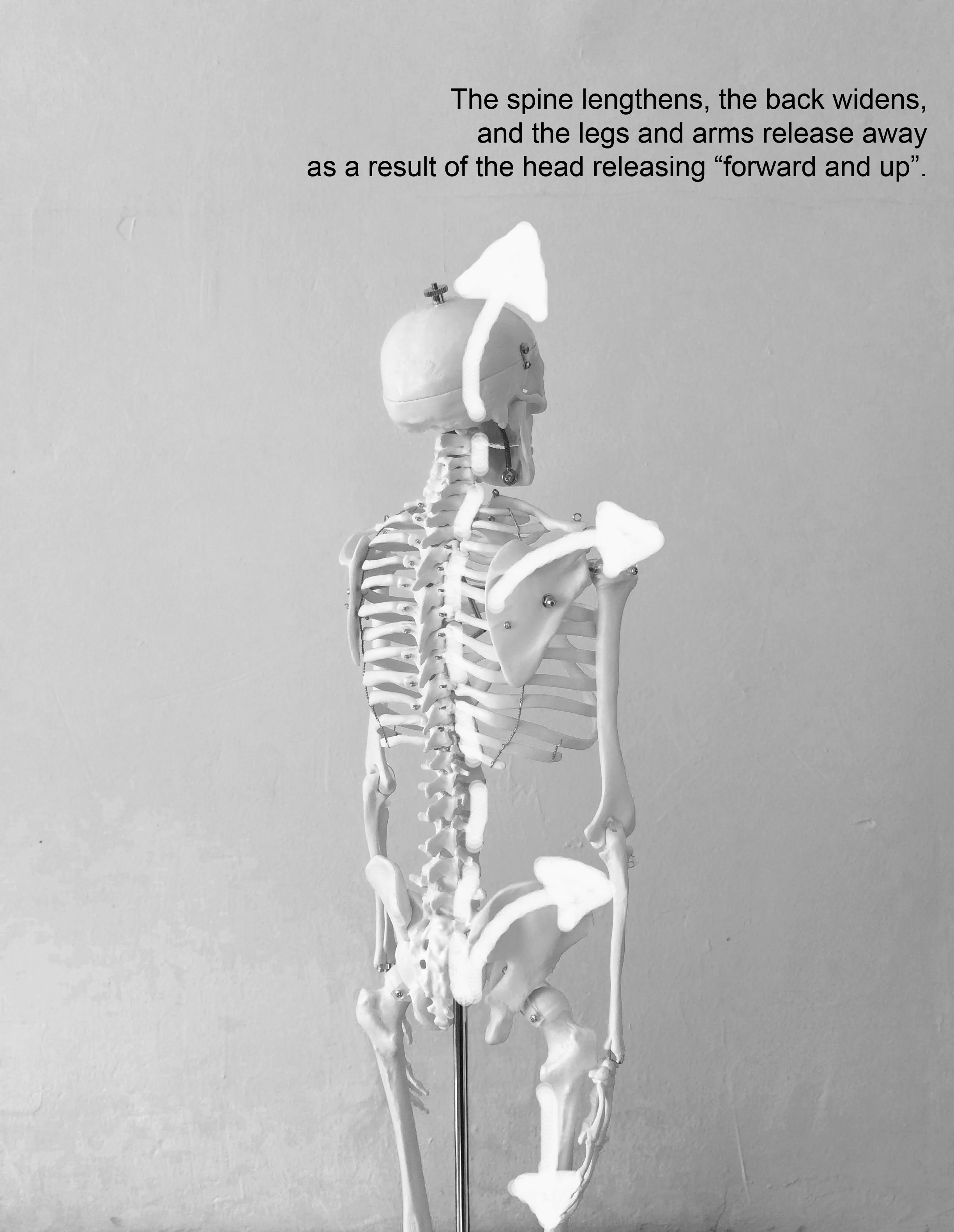
Repairing boundary breaches and becoming conscious of our habitual defenses helps us achieve a greater sense of wholeness and agency. Somatic Experiencing guides us to detect how our boundary breaches manifest psycho-biologically, and discover our innate capacity to repair these ruptures.  Alexander Technique helps us understand how our coordination may be keeping us trapped in defensive postural patterns. Excess tension can act as a suit of armor against sensing and feeling. We learn how to gently unwind these fortified patterns and experience greater safety and freedom in more open, vulnerable, embodied coordination. Both modalities cultivate a more accurate internal barometer to judge when something is an actual threat or just perceived as such.

We are filters for a vital life force moving through us, permeable beings in connection to our environments and one another. Healthy boundaries mean we are more capable of choosing who and what we allow in, and more intentional with what we share with the world. 

Control & Surrender

Control & Surrender

Instead of tying up our cognitive resources consciously deciding how to tie our shoes, eat our meals, and get to work every day etc., we create habits to ensure these activities are reliably completed in order to free up space for other, potentially more fertile, thought processes. Habits satiate our desire for predictability. That which remains static is much easier to control. In a life dominated by unconscious habit, we can maintain our status quo, for better or worse, in attempts to minimize having to manage our relationships to change and unpredictability.

In the other direction, we may long to lose control as a means of disrupting this stasis, perhaps helping us to remember that we’re alive.

Surviving to Thrive: A Union of Intuition and Reason

Surviving to Thrive: A Union of Intuition and Reason

All living things are survivors. We are built to keep going forward until our last moments. But rather than just plodding along in survival mode, how can we move in the direction of thriving?

When we have unresolved trauma in our lives, it’s as though some part of us does not understand we survived. Even if the perceived threat has long passed, some part of us believes that we are still in danger, and our nervous system behaves as such. This affects everything from how we digest our food to how we interact with our friends and loved ones. It informs how we sense the world around us, and therefore how we move through it.

Let's Organize Ourselves Around Spaciousness

Let's Organize Ourselves Around Spaciousness

What would it mean to organize our mind-body-selves around spaciousness and move from there? If there are an infinite number of points between any two points, then we can infer that there is an infinite amount of space between each of these points as well. It follows that between every atom in our bodies there is an infinite amount of space. We can therefore consider ourselves permeable, interconnected, affected and affecting our environment near and far. We are not closed systems acting in isolation.

Three Cheers for Despair!!!

Three Cheers for Despair!!!

Hope is a prized value woven prominently into the fabric of America. Our culture urges us not to sit in the discomfort of despair. We insist on striving for a hopeful outlook no matter how bleak the circumstances. However, I write this in defense of despair. Allowing ourselves to be with this discomfort can act as a catalyst for change. Rather than thinking in mutually exclusive terms: hope or despair, I’d like to propose a spectrum containing both.

The Organization of Movement in Crisis

The Organization of Movement in Crisis

Why does it take a crisis for us to wake up? We slumber in the false security of habit and stasis, content to close our eyes to the injustices of our world as long as they do not directly affect I, Me, or Mine. But when a crisis is what we’ve got, it’s all we can do to act quickly to put out the fire, no matter the cost to our wellbeing. The thing is, adrenaline burns up just as fast as the fire is extinguished. So if we’re dealing with long-term systemic crises, it’s absolutely crucial to know how to establish a well-organized framework for sustainable (M)ovement that supports us as individuals and in turn, each other.


Hillary Clinton and the Alexander Technique

Hillary Clinton and the Alexander Technique

Whether you’re “with her” or not, that a woman has received the Democratic nomination for president is an undeniable watershed in the history of the United States. 

However, as I watched her acceptance speech last week I found myself thinking what so many of her critics and supporters alike have mentioned: that she “lacks charisma.”

The Anxiety of Doing Less

The Anxiety of Doing Less

Summertime is when we grant ourselves greater permission to take it easier. Maybe it's just that the heat slows us down, or our bodies forever remember summer vacations from school, but somehow we've collectively agreed that July and August mean it's okay to Do Less.

As someone in the business of helping people Do Less in their mind-body-selves I am in full support of this seasonal credo. However as we age, a sneaking mistrust of the ease this practice affords can overtake us.

Living the Questions - Part III

Living the Questions - Part III

The last post in this series outlined how if we want to enact change in our lives we’ve got to establish an embodied foundation where we feel safe; we’ve got to adopt a beginner’s attitude; and we’ve got to let go of what we think our process and/or our outcome should look like. But now what? We could sit around all day pondering these things without moving a muscle. That practice alone could be considered a kind of meditation, beneficial in and of itself. But what does this look like in action? The Alexander Technique is meant to help us find more freedom and efficiency in all our daily activities. So let’s look at how we can practically apply what we’ve learned so we can live the questions in a way that helps us do what we want to do better.

Living the Questions - Part II

Living the Questions - Part II

In Part I of this series we explored how real change necessitates moving toward the unknown; how moving toward the unknown is inherently vulnerable; and how in our culture, living in the vulnerability of the unknown is associated with weakness rather than strength.

In this post I aim to introduce how the Alexander Technique has given me an embodied framework to feel safe, free, and strong as I look to embrace change daily, and am therefore consistently moving toward and living in the unknown.

Living the Questions - Part I

Living the Questions - Part I

Students and teachers of the Alexander Technique are all after one thing: CHANGE. But what does real change entail? The Nervous-Nelly-Know-It-All in me wants immediate change along with 100% Satisfaction Guaranteed. I want a detailed outline of how to get from point A to point B, to keep me contained in the illusion that I control my life. But in order to change and learn and grow we must inevitably go towards what we do not know. Otherwise we will repeat our past in various iterations over and over again, individually and collectively.

Stress Busting Tips for Fall

Stress Busting Tips for Fall

And we're off! The post Labor Day hustle is here, and with that transition out of summer’s leisurely pace I sometimes feel a little anxious and overwhelmed by all there is to get done. So how do I maintain some semblance of poise while charging ahead at full steam with a dream and an infinite To-Do List in hand? 

I Can't Get No...

I Can't Get No...

Human beings have been talkin’ about dissatisfaction for a long time.The grass is always greener on the other side. And we find ourselves thinking if we can just get to the next level where we make more money, have a bigger house, snag the perfect partner, THEN we’ll be happy and satisfied. From the somatic viewpoint of the Alexander Technique, this wanting to be in another place and time, or wanting things to be different than how they are, has strong physical correlates. Personally my chest gets tight, and though it’s still a great song by Duncan Sheik, I’m Barely Breathing . I lose any sense of the points of contact I’m making with the ground or my chair, and I often stare at one point in the distance with a furrowed brow. I feel anxious, and my attention span shortens as I flit from one busy activity to the next. 

Gokhale Method vs. Alexander Technique

Gokhale Method vs. Alexander Technique

NPR recently featured a story on Esther Gokhale’s method for helping people uncover their “Primal Posture™ for a Pain-Free Life”.


Since its publication, this story, entitled “Lost Posture: Why Some Indigenous Cultures May Not Have Back Pain”, was sent to me so many times by members of my community, a thoughtful response from my perspective as an Alexander Technique teacher seems appropriate and hopefully useful.

An Open Letter to Your Boss

An Open Letter to Your Boss

Google’s Senior Vice President of People Operations, Laszlo Bock, recently endorsed the Alexander Technique for helping with “desk bound back pain” in his new book Work Rules.

Oh dreamy Google, if only all companies could foster such awesome workplace environments.

My universal vision is that one day everyone with a desk job, or who uses a computer for long periods of time, would learn the skill of Alexander Technique to help them stay pain free and injury free, and reduce work related stress.

In my vision, I see open spaces with yoga mats and soft cover books where employees do Constructive Rest on their lunch breaks, or as part of their prep for big presentations, or even as a way to begin meetings.

That’s why I have drafted a memorandum below to be sent to your boss. That’s right, your Head Honcho, Chief Director President Executive Officer, Charles in Charge, Super-Duper-Visor, to let them know it’s high time some changes were made. Self-care is nonnegotiable. Because hey, we all deserve a chance to be as cool as Google. 

And if you already are the boss, this one’s for you.

How the Alexander Technique Helped Me Get Hired and Promoted Twice All in One Year

How the Alexander Technique Helped Me Get Hired and Promoted Twice All in One Year

It started as an entry-level position, transcribing raw uncut video footage for a television production company, Monday through Friday, eight hours per day. Having no dreams or aspirations to forge a career in television, it was just helpful to have a job that paid my bills as I finished my last year of Alexander Technique teacher training.

My friend recommended me to the hiring manager, which got me in the door, but the interview went well too. Grounded through my sit bones, and the contact of my feet on the floor, allowing the chair to support me, my breath moved calmly and freely. Staying open through my shoulder girdle, and long through my spine, I did not sink down or collapse into my low back and abdomen. Voice clear, eyes bright and open, I connected with the supervisor in an alert but relaxed way. These were my Alexander Technique skills in action.

I was hired.